
Can I Study Abroad with 50% Marks?
Many Pakistani students believe that getting admission abroad is impossible if they have low marks or a low CGPA. However, this is not always the case. Students with 50% marks can still find study abroad opportunities, depending on their previous qualification, chosen course, university, country, English-language proficiency, and overall academic profile.
Universities do not all follow the same admission criteria. Some institutions may have higher academic requirements, while others offer foundation, pathway, diploma, or alternative entry routes for students who do not meet direct-entry requirements.
If you have around 50% marks, the key is to choose a realistic destination and programme rather than applying randomly.
Is it Possible to Study Abroad with 50% Marks?
Yes, it is possible to study abroad with 50% marks, but admission is not guaranteed.
Your eligibility depends on several factors, including:
- Your previous qualification
- Percentage or CGPA
- Subject background
- Chosen degree
- University admission requirements
- English-language test score
- Study gap, if applicable
- Relevant work experience
- Financial capability
- Overall student profile
For example, a student with 50% in Intermediate may have different opportunities from a student with 50% in a bachelor’s degree applying for a master’s programme.
Therefore, students should check the specific entry requirements of each university before submitting an application.
Which Countries Can Pakistani Students Consider with 50% Marks?
Several international destinations may provide options for students with moderate academic results. However, requirements vary significantly between universities and courses.

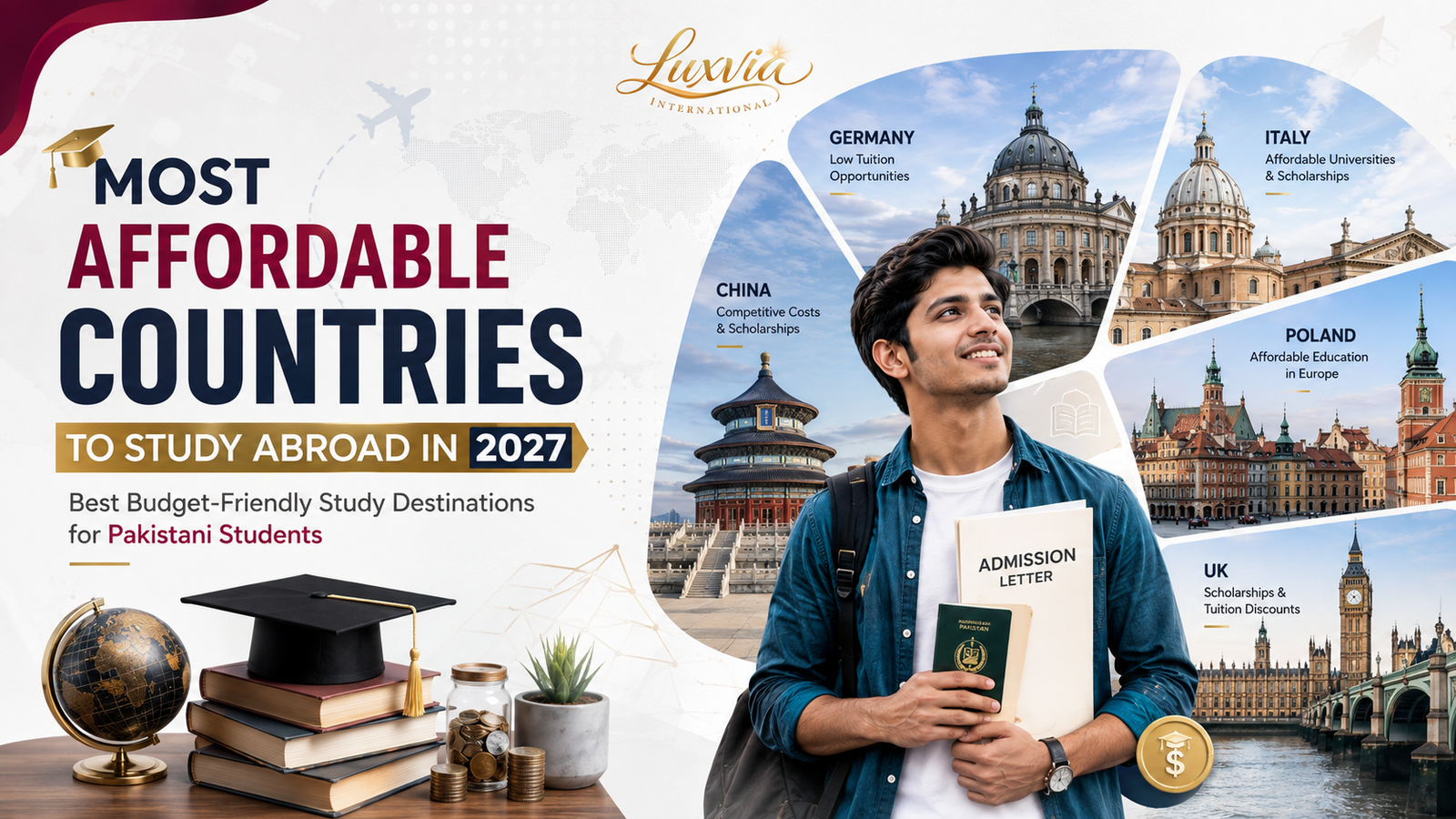
1. United Kingdom
The UK is one of the most popular destinations for Pakistani students and offers a wide range of universities and programmes.
Students with lower academic results may find opportunities through:
- Foundation programmes
- International Year One
- Pre-Master’s programmes
- Selected bachelor’s programmes
- Universities with flexible entry requirements
For postgraduate applicants, relevant bachelor’s qualifications, subject compatibility, English proficiency, and professional experience may also influence the admission decision.
Students should not assume that every UK university accepts 50%. Requirements differ by institution and programme.

2. Italy
Italy can be an attractive option for students looking for affordable European education and scholarship opportunities.
Admission requirements vary between universities and programmes. Some courses focus strongly on academic background and subject prerequisites, while others may have different evaluation criteria.
Students should carefully check:
- Academic eligibility
- Course prerequisites
- Language requirements
- Application deadlines
- Financial documentation
- Visa requirements
A lower percentage does not automatically mean that an Italian university will accept an applicant, but students with moderate grades should explore individual university requirements rather than ruling out Italy completely.

3. China
China offers a broad selection of programmes for international students, including bachelor’s, master’s, engineering, business, computer science, and medical programmes.
Some universities may have different academic requirements depending on the programme and level of study.
Pakistani students should pay particular attention to:
- University-specific eligibility
- Required subjects
- English or Chinese language requirements
- Medical examination requirements where applicable
- Scholarship criteria
- Programme accreditation
Students should distinguish between university admission requirements and scholarship requirements, as scholarship eligibility can be more competitive.

4. Lithuania
Lithuania has become an option for international students seeking European education.
Depending on the university and programme, students with moderate academic results may find suitable programmes. However, applicants must still satisfy the institution’s academic and English-language requirements.
Before applying, students should check:
- Minimum academic percentage
- Previous qualification
- English proficiency
- Tuition fees
- Available programmes
- Visa documentation
Students should also make sure that the selected institution and programme are properly recognised.

5. Other European Destinations
Students with 50% marks can also investigate opportunities in other European countries, but eligibility should always be assessed on a university-by-university basis.
The most important point is that there is no single “50% rule” for studying abroad.
One university may accept a particular academic profile while another university may reject the same applicant.
Can I Study Abroad with a Low CGPA?
Yes, students with a low CGPA may also have options, particularly when applying to programmes with flexible admission requirements.
For master’s applicants, universities may consider more than just CGPA. Depending on the institution, factors can include:
- Bachelor’s degree
- Relevant academic subjects
- Work experience
- Professional qualifications
- English proficiency
- Statement of Purpose
- Academic progression
- Previous coursework
For example, a student with a relatively low CGPA but strong relevant work experience may have a different profile from a student with the same CGPA and no relevant background.
However, students should never assume that work experience will automatically compensate for failing to meet a university’s minimum academic requirement.
Can I Study Abroad with 50% After Intermediate?
Students who have approximately 50% marks in Intermediate may still have options for undergraduate study abroad.
Depending on the destination and university, possible routes can include:
Direct Bachelor’s Admission
Some universities may consider applicants directly for bachelor’s programmes if they meet the institution’s academic and subject requirements.
Foundation Programmes
A foundation programme can provide an alternative route for students who do not qualify for direct entry to a bachelor’s degree.
Pathway Programmes
Pathway programmes are designed to help international students meet academic or language requirements before progressing to a degree.
The correct route depends on your qualification, subjects, marks, English proficiency, and chosen degree.
Can I Study Abroad with 50% for a Master’s Degree?
For master’s admission, the situation can be more complicated.
Universities usually require a recognised bachelor’s degree with a specified minimum classification or CGPA. Some programmes may also require a relevant undergraduate subject background.
Students with lower bachelor’s results should consider:
- Universities with suitable minimum entry requirements
- Pre-Master’s programmes
- Relevant professional experience
- Alternative postgraduate qualifications
- Courses that match their previous academic background
Most importantly, do not apply solely based on a university’s overall reputation. A university may be highly suitable academically but still have an entry requirement that your profile does not meet.
How Can I Strengthen My Application with Low Marks?
Having 50% marks does not mean you should submit a weak application.
You can strengthen other parts of your profile by focusing on the following:
1. Choose the Right Course
Your chosen programme should make academic sense based on your previous qualification.
A logical academic progression can make your application easier to understand.
2. Improve Your English Proficiency
A strong IELTS, PTE, TOEFL, or another accepted English-language qualification can demonstrate your ability to study in an English-speaking academic environment.
Always check which tests your selected university accepts.
3. Gain Relevant Experience
Professional experience can strengthen your profile, particularly for postgraduate or professionally oriented programmes.
However, experience should be relevant and genuine.
4. Prepare a Strong SOP
Your Statement of Purpose should clearly explain:
- Your academic background
- Why you selected the course
- Why you selected the university
- Why you want to study abroad
- How the course fits your career plans
- Any relevant academic or professional development
Do not try to hide your academic history. Instead, present your educational journey honestly and explain your future direction clearly.
5. Apply to Realistic Universities
One of the biggest mistakes students make is applying only to highly competitive universities.
A better strategy is to identify institutions where your academic profile genuinely meets the published requirements.
What If I Have 50% Marks and a Study Gap?
A study gap does not necessarily prevent you from studying abroad.
However, you should be prepared to explain what you did during the gap.
For example, your gap may involve:
- Employment
- Business
- Professional training
- Certifications
- Internships
- Family responsibilities
- Other legitimate activities
The important issue is whether your overall academic and professional history is credible and whether your chosen course makes sense.
Students should provide genuine supporting documentation wherever applicable.
Can Low Marks Affect My Student Visa?
Admission and visa assessment are two different stages.
A university may issue an offer based on its admission criteria, but the student may still need to satisfy the relevant immigration requirements.
Visa authorities can consider factors such as:
- Genuine study purpose
- Financial capability
- Academic background
- Course selection
- Previous education
- Supporting documentation
- Immigration history where relevant
Therefore, getting an admission offer does not automatically guarantee a student visa.
Common Mistakes Students with 50% Marks Should Avoid
Applying Without Checking Entry Requirements
Never assume that because one university accepts 50%, every university will.
Choosing an Unrelated Course
A major change in academic direction without a convincing explanation can create questions about your study plans.
Using False Documents
All academic, financial, employment, and personal documents must be genuine.
Focusing Only on Visa Success
A suitable university and course should come first. Students should not choose a destination simply because someone claims that its visa process is “easy.”
Applying to Too Few Universities
Students with moderate academic profiles should build a realistic application strategy rather than relying on one institution.
Read Our More blogs:
UK Student Visa Requirements:
https://www.gov.uk/student-visa
Italy Requirements:
https://www.universitaly.it/it/first-steps

Leave a Reply